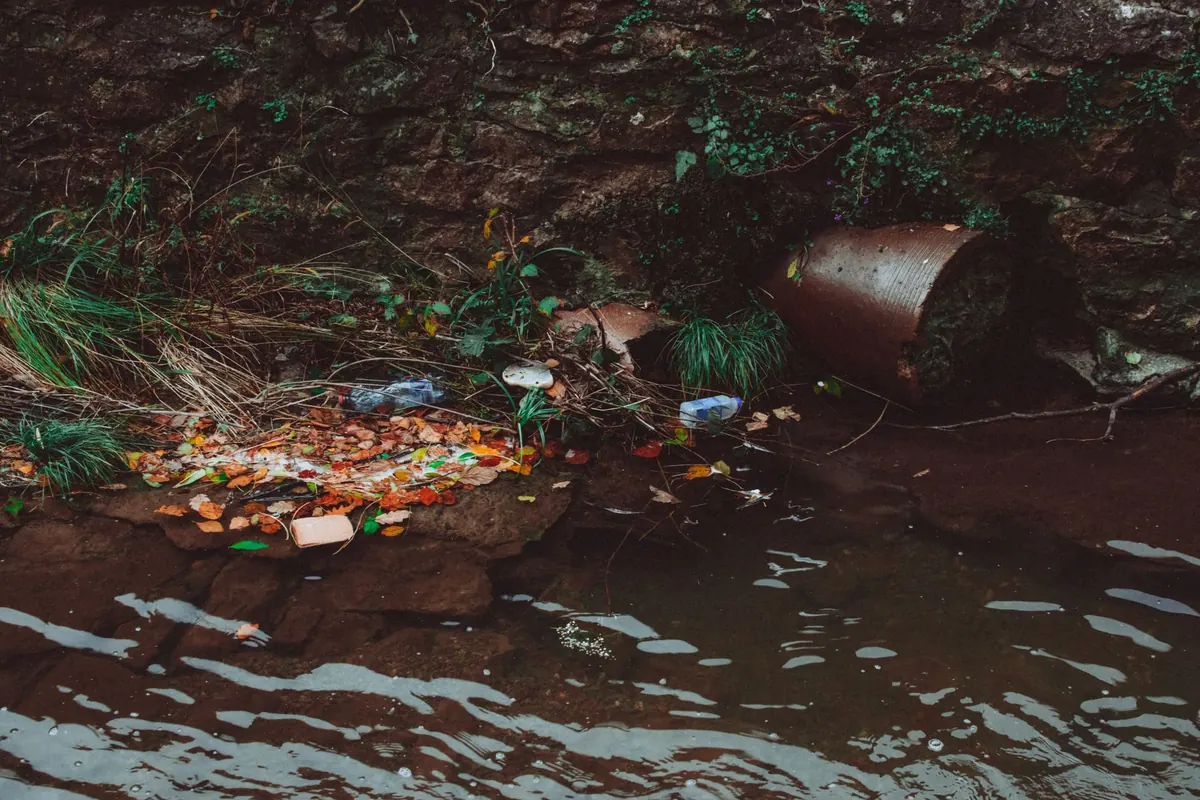
What to Do If You Find a Pollution Incident in a Brook
A brook that turns the colour of weak tea after heavy rain is doing what brooks do. A brook that turns grey, smells of detergent, or carries an oily rainbow and a line of dead minnows is something else entirely — and what you do in the next hour shapes how far any investigation gets.
You don't need to be a scientist or a river warden to be useful here. You need a phone, a clear head and the right number.
Put Your Own Safety First
Pollution incidents often involve things you would rather not have on your skin: sewage, agricultural slurry, diesel, industrial chemicals, occasionally cyanobacteria — the so-called blue-green algae that can be toxic to people and dogs. A few firm rules:
- Stay out of the water. Don't wade in for a closer look, even on a shallow stretch.
- Keep children and dogs well back. If a dog has already been in or has drunk from the brook, rinse it and ring a vet if it seems unwell.
- Don't handle dead fish or birds with bare hands. Use a stick or a bag over your hand if you need to move something for a photograph.
- Wash your hands as soon as you can, and don't eat or drink until you have.
- If there is a threat to life — someone in difficulty, a tanker in the water, a strong chemical smell near homes — ring 999 first. Otherwise use the pollution hotline below.
If you or a pet becomes ill after contact with the water, seek advice from a GP or a vet rather than waiting to see how it develops.
Work Out Roughly What You're Looking At
You don't have to diagnose the problem, but a few notes on appearance help the person taking your call route it correctly.
- Sewage: grey or milky water, a smell of drains, and wet wipes, sanitary items or toilet paper snagged on branches.
- Farm run-off: brown, cloudy water after rain, sometimes with a silage or slurry smell, often from a field drain or gateway.
- Oil or fuel: a film that swirls back together if you disturb it. Natural iron bacteria films can look oily but tend to break into angular flakes instead — describe what you see rather than what you assume it is.
- Detergent: white, soapy foam that persists, rather than the brown bubbles at the foot of a weir.
- Silt: a sudden chocolate-coloured plume from a building site or an eroding bank.
- Chemical or unknown: an unnatural colour — green, blue, purple — or fish gasping at the surface.
Bear in mind that a brook can be badly polluted and still look almost normal. A fish kill with no colour change is an incident.
Capture Evidence Before You Move On
A photograph with a time and place attached is worth far more than a description given from memory. Get both wide shots and close-ups.
- Date, time and exact location — a grid reference, a what3words address or a dropped pin. Note which bank you're on and which way the water flows.
- Wide shots of the whole affected stretch, then close-ups of the water, the foam or sheen, the outfall and any debris.
- Something for scale beside the worst of it: a boot, a stick, your hand.
- Video with sound. A clip of a pipe discharging is hard to argue with.
- Any pipe, drain or outfall that seems to be the source, and where it sits relative to the pollution.
- Wildlife: dead or distressed fish, invertebrates, birds. Rough numbers are fine.
- Weather over the previous day or two, and whether the brook was running high or low.
Don't trespass for a better angle, and don't take samples unless the regulator asks for one — amateur samples are rarely usable and can be mishandled. If you are asked, use a clean glass jar, fill it as full as possible, label it with the time and place, keep it cool and hand it over quickly.
Report It to the Right Authority
Ring rather than email if the pollution is still happening. The main UK pollution hotline is 0800 80 70 60, which reaches the Environment Agency, Natural Resources Wales, the Scottish Environment Protection Agency or the Northern Ireland Environment Agency depending on where you are. Confirm the current number on your regulator's website if you want to be certain.
- Sewage from a sewer or storm overflow: also ring the local water company on its 24-hour line. Overflows are their responsibility and they log every report.
- Fly-tipping, contaminated surface water drains or a small commercial discharge: the council's environmental health team can act.
- A fish kill, or pollution in a Site of Special Scientific Interest: say so on the call. It tends to move the report up the queue.
What to Say When You Get Through
Have your notes in front of you and keep it factual:
- Where you are — precise location plus a landmark that helps someone find it.
- When you saw it, and whether it is still discharging now.
- What you can see and smell, in plain terms of colour and extent in metres.
- Whether wildlife is affected, and how badly.
- Anything that identifies a source — a business name on a tanker, a registration number. Note it from a distance; don't go and ask.
- Your name and a contact number, and ask for an incident reference number.
Ask what happens next and roughly when. Write the reference down. If the line is busy, ring again — a repeat call about an ongoing discharge is not a nuisance.
After You've Reported It
Keep your notes and photographs. Ring back in a few days with the reference number and ask whether an officer attended and what was found. Regulators do answer these questions, and following up is a legitimate part of the process.
Tell your local river group or Rivers Trust as well; they often track incidents across a catchment and can press for a proper investigation. What they can't do is act on a report that never reached the regulator, so make the call first.
One caution: think twice about naming a suspected polluter on social media. It can complicate an investigation, and a public accusation that turns out to be wrong can create legal difficulties for you. If you're considering a claim over damage to land, livestock or a fishery, take advice from a solicitor rather than a forum thread.
The Short Version
Stay out of the water. Photograph everything, with time and place. Ring 0800 80 70 60 while it's still happening, plus the water company if it is sewage. Get a reference number, and ring back in a few days.
Brooks recover faster than most people expect — but only when someone notices, and only when that notice reaches the people with the powers to act. Save the number in your phone now. Next time you're walking a stretch you know well, you'll be ready.
Photo: Lisa Fotios / Pexels