Common Mistakes When Restoring a Brook (and How to Avoid Them)
Common Mistakes When Restoring a Brook (and How to Avoid Them)
Most brook restoration projects start with good intentions and a digger. A season later the banks are tidy, the channel is wide, and the brook is somehow worse off than before. The mistakes that cause this are rarely reckless. They are usually small, sensible-seeming decisions that make a site look neater while making the watercourse less able to look after itself.
Brooks in Britain have been straightened, ditched and culverted for centuries, and plenty of them need help. But help that ignores how a small watercourse behaves tends to be undone by the next high flow. A brook is not a ditch with decorative stones. It is a moving system of water, sediment, wood and vegetation, and it will adjust to whatever we do.
Over-engineering the banks
When a bank erodes, the instinct is to stop it. In go gabion baskets, riprap or concrete blocks. It holds for a few metres. The energy that the eroding bank was absorbing simply moves downstream and finds a softer target — a field, a footpath, a culvert apron. A common pattern is a concrete toe installed along thirty metres of eroding bend. Within two winters the opposite bank is cutting badly, and the concrete wall is undercut at its downstream end. The problem has not gone; it has moved.
Hard engineering has its place. Where a road, bridge abutment or sewer is genuinely at risk, a designed structure is the right answer, and it should be drawn up by someone experienced. A mobile bank in a field is a different case: that bank is habitat, and the sediment it releases feeds riffles downstream. Erosion is not always loss. It is how a brook builds and maintains the gravel beds that fish and invertebrates need.
Softer alternatives
- Let the brook pick its own line where space allows. A few metres of setback costs less than a gabion wall and lasts longer.
- Where you must hold a toe, use willow spiling, live stakes, brash bundles or pinned root wads.
- Allow variety. Pools, riffles, shallow margins and the odd undercut bank are the goal, not a failure of the works.
- Fence stock back from the edge and let bankside plants re-establish. Roots do the engineering for free.
- Use large woody material to deflect flow and create scour pools rather than armouring the whole bend.
Taking out the woody debris
Fallen branches and half-submerged log jams get reported as blockages, and are often cleared before anyone asks what they are doing. In a small brook they are doing plenty: creating pools and cover for brown trout and bullhead, trapping gravel and leaf litter, feeding shredding invertebrates, and slowing the peak of a spate as water threads through. A good log jam is not a dam. It is a leaky structure that lets water pass while holding back the energy of the flood.
Blanket removal leaves a clean, fast, uniform channel that flushes silt straight through and gives fish nowhere to rest. If a jam genuinely causes trouble — backing water onto a road, blocking a culvert, threatening a structure — deal with that jam and leave the rest. Pin loose material if it might move the wrong way. Let trees on the bank fall in when their time comes rather than felling them while the machine is on site. If you must remove a jam, consider replacing it with a pinned root wad or a few anchored logs so the habitat function is not lost.
There is a difference between a blockage and a feature. A culvert inlet needs to be clear. A bend in a meadow with a tangle of alder branches does not. Learn to tell them apart before the chainsaw comes out.
Getting the shade wrong
Over-clearing is the more common error. A brook opened up along its whole length loses the dappled shade that keeps summer water cool, and gains blanket weed, silt and algae. Small brooks warm quickly; cool water holds more oxygen. On a hot July day, a shaded reach can be several degrees cooler than an open one, and that difference matters to trout, bullhead and stonefly nymphs.
The opposite mistake — planting every metre of an already shaded brook — can stall recovery just as effectively. Aim for patches of shade over roughly half to three-quarters of the channel, sunny stretches where in-channel plants can grow, and a mix of native species of local provenance. Alder and willow suit wet ground. Ash is a common sight along British brooks, but ash dieback means it should not carry the whole plan. Add hazel, field maple, oak or hawthorn on drier banks, and let some natural regeneration fill in the gaps.
Never plant into the channel bed or across gravels. Gravels are spawning habitat, and they silt up fast once disturbed. On a south-facing reach, more shade is usually welcome; on a north-facing reach, a lighter canopy may be enough. Think about the sun across the whole day, not just the view from the footpath.
Fixing the brook while ignoring the catchment
A restored half-kilometre will not stay restored if the field above is still shedding fine silt, a misconnected surface-water drain still discharges into it, or a failing septic tank still trickles into a ditch. Sediment and nutrients are the two things most likely to undo the work. Fine sediment smothers gravels, fills pools and carries phosphorus with it. Nutrients fuel algae and blanket weed, which can choke the channel in summer and strip oxygen at night.
Source control is almost always cheaper than repeated in-channel dredging. Walk the catchment after heavy rain. Watch where muddy water enters the brook: a farm gate, a compacted track, a road drain, a ditch from new housing, an eroding field corner. Fix those first where you can. Buffer strips, grass margins, sediment traps, troughs moved away from the ditch, and careful timing of slurry spreading all help. Work with landowners and the local authority; a brook is only as healthy as the land it drains.
A familiar story is a restoration project that spends months re-meandering a brook through a park, only to find a silt plume after every storm from a collapsed land drain under an industrial estate upstream. The new gravels are buried within a year. The in-channel work was good, but it was downstream of the actual problem.
Rushing the survey and permissions
Before digging, know what you have. Walk the brook in low flow and again after rain. Map riffles, pools, gravels, outfalls, invasive species and signs of protected species. Water voles, otters, white-clawed crayfish, salmonids, lamprey and bullhead can all turn up in small brooks, and each has its own legal protection. A quick walkover with a digger already on site is not a survey.
Check permissions early. In England, works to an ordinary watercourse may need land drainage consent from the lead local flood authority, and some activities need an environmental permit from the Environment Agency. In Wales, Scotland and Northern Ireland, the regulators differ. If the site is a Site of Special Scientific Interest or a Special Area of Conservation, additional consent is almost certain. You will also need the landowner's permission, and often the agreement of any tenant farmer.
Timing matters too. Avoid spawning seasons for trout, salmon and coarse fish, typically late autumn to early spring, and avoid the hottest, driest weeks when any disturbance is hard on fish and invertebrates. Summer low-flow work can be suitable, but not in a drought. Allow weeks, not days, for permissions and advice. Local rivers trusts, wildlife trusts and catchment partnerships can often help before you submit anything.
Monitoring and maintaining with a light touch
Restoration is not a one-off. Take fixed-point photos before, during and after. Measure cross-sections, note gravel depth, pool depth and vegetation cover. Look for signs of recovery: clean gravels, trailing vegetation, fish fry, mayfly nymphs, and a channel that is beginning to vary in depth and width. Keep a simple record; it will help you explain the work to funders and landowners.
But do not over-manage. Leave leaf litter and woody debris where they are. Clear only what threatens infrastructure, and clear it before winter rather than after the first flood. After a spate, check for new undercut banks, which are valuable habitat, and for new blockages at culverts. Fence stock for a season or two if banks are poached, then review; permanent fencing may not be needed if off-stream watering is provided.
If in doubt, do less and watch the brook's own response. It usually knows the shape it wants.
A different measure of success
Good brook restoration is often humbler than it looks. It may leave a few fallen branches, a ragged bank, a patch of shade and a muddy edge. It may not look like a park. But if the brook is holding cool water, moving gravel, trapping leaves and supporting fry, it is working. Avoid the mistakes above, fix the catchment where you can, and give the brook the time and space to repair itself. The next high flow will tell you whether you got it right.
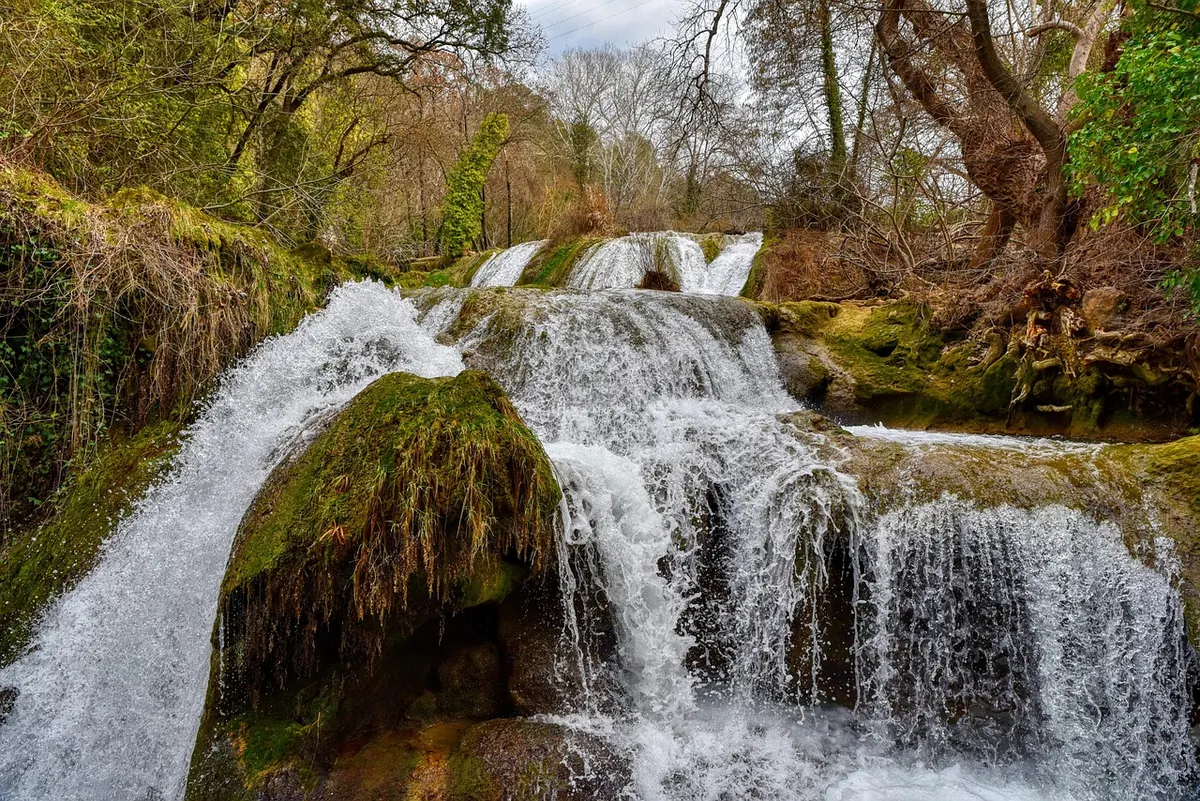
Photo: lecreusois / Pixabay